Independent and whole-of-market
We're not tied to one lender. We compare the market and stay fee-transparent, so you see every option — not just one bank's product.
Asset finance
Spread the cost of vehicles, machinery and business-critical assets over their useful life — without draining working capital.
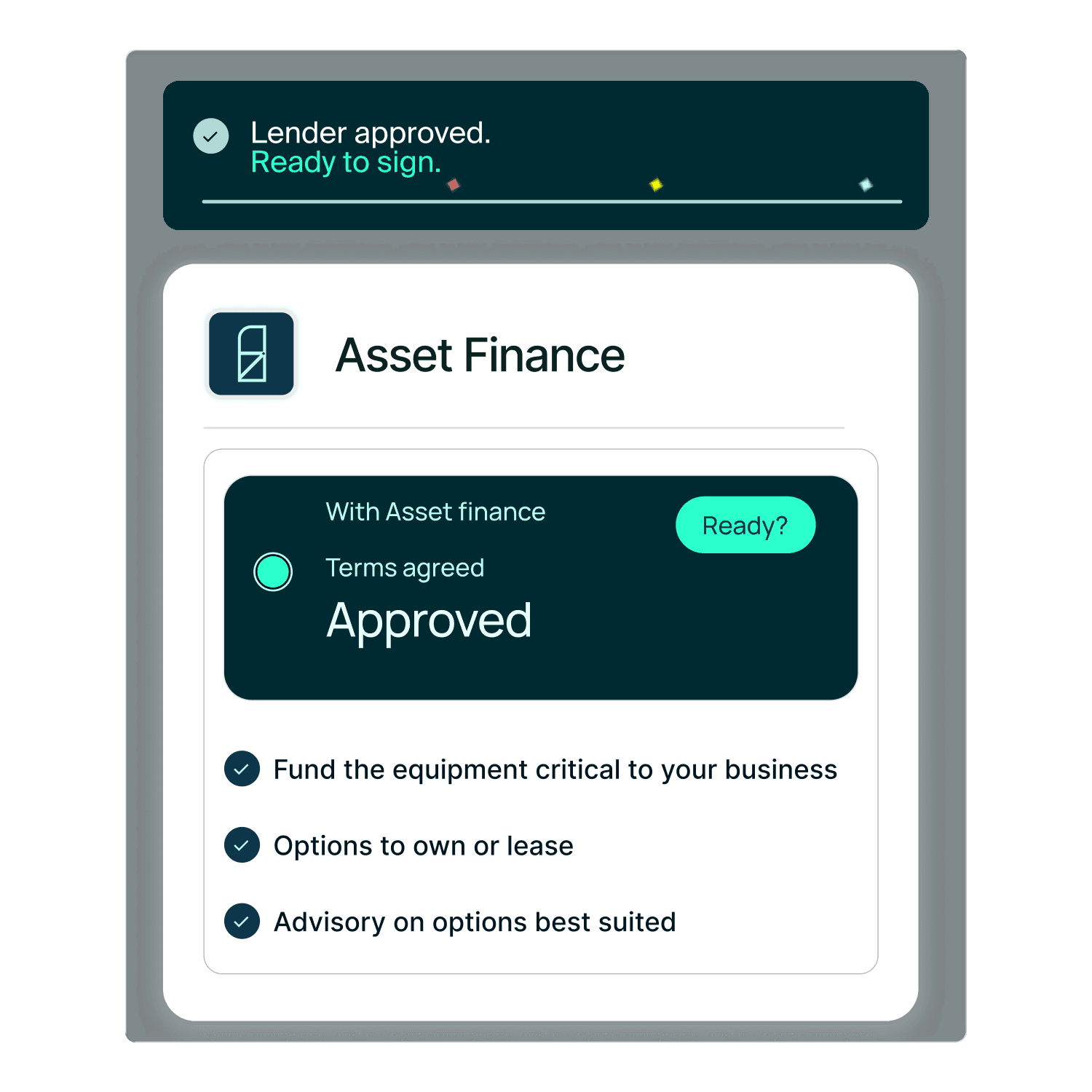
Secure the asset. The vital kit your business runs on.
Spread the cost. Over the asset's useful life — the asset itself secures the deal.
Keep your cash. Your overdraft and covenants stay where they belong.
The problem
A £180k machine. A new fleet of vans. A site fit-out. One large purchase drains months of working capital — money you need for stock, payroll and the next contract.
What we fund
Vans, trucks, HGVs and fleet refresh — new or used.
Manufacturing lines, production kit, agricultural and construction equipment.
Forklifts, racking, handling equipment, fit-outs.
Hardware, telecoms, software-bundled deals, office refits.
Medical, dental, veterinary, catering, renewables.
Release cash from equipment you already own.
Five ways to structure asset finance
The right structure depends on whether you want to own the asset, how long you'll use it, and what you need from your cash flow.
| Ownership during term | Ownership at end | Balance sheet | Maintenance / risk | |
|---|---|---|---|---|
Hire purchaseOwn the asset at the end. Fixed monthly payments, ownership transfers to you. | Asset and corresponding liability are recorded on your balance sheet. | You handle repairs, insurance, and bear obsolescence risk. | ||
Finance leaseUse the asset for most of its life. Lender owns it, you pay to use it. | Often appears on the balance sheet. | You handle repairs and insurance. | ||
Operating leaseUse it for part of its life. Good when you'll upgrade regularly. | Usually sits off-balance-sheet (disclosed in notes). | Often included in the contract by the lessor. | ||
Asset refinanceRelease cash from an asset you already own. | Title never changes, but acts as security for the funder. | Asset stays on your balance sheet. Loan liability is added. | You remain fully responsible for the asset. | |
Sale & HP backSell an asset to a lender, lease it back. Cash now, no disruption. | You sell title to the lender. Usually buy it back at the end (HP) or not (Lease). | Retain usage — usually return the asset or lease a new one. | Equipment remains on the balance sheet; a lease/loan liability is added. | You maintain the asset as usual during the contract. |
Swipe to see all columns →
Why Stable
Your bank will recommend their asset finance product. Stable shows you the whole market — including the specialist lenders banks do not list.
Learn moreWe're not tied to one lender. We compare the market and stay fee-transparent, so you see every option — not just one bank's product.
We benchmark deposit, term, total cost of credit, early settlement and lender appetite for your sector. The cheapest monthly payment is rarely the best deal — we tell you why.
Save time and energy — we've already got partners vetted who can offer solutions.
Lender criteria
A business-critical asset with a strong resale market is often easier to fund than a hard-to-value specialist piece — even for younger businesses.
Book a callNew or used, resale value, supplier credibility.
Turnover, profitability, trading history, existing debt.
Credit profile and bank conduct.
Repayments against current and forecast cash flow.

Before you sign
Before continuing, have a think about these critical questions.
Need help? Talk to us
Get started
Whether it is a vehicle, a production line or your first piece of specialist equipment, Stable helps UK SMEs get the right asset finance from the right lender — at a price that makes commercial sense.
FAQs