1. Identify the stock or order
A purchase order, supplier invoice, import contract or stock requirement.
Trade finance
Trade finance for UK SMEs buying, selling and importing goods — bridging the gap between supplier payment and customer payment without draining working capital.
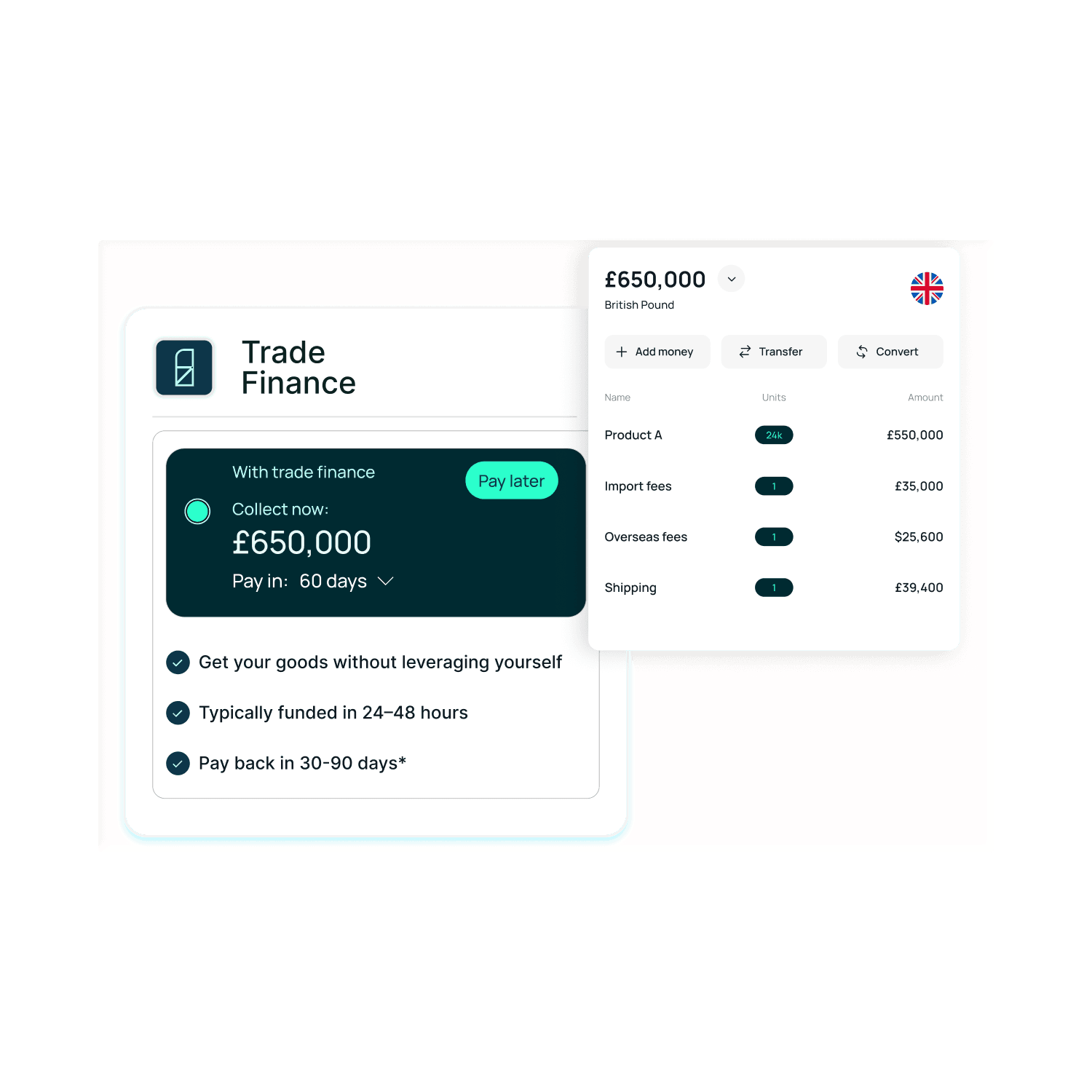
Fund the goods. The order, the stock or the supplier payment.
Bridge the gap. Between purchase and customer payment.
Repaid on sale. When the stock sells, the invoice is collected, or an agreed event triggers.
The problem
Importing stock. Paying overseas suppliers. Funding large orders. Bridging the gap between purchase and customer payment. Even profitable businesses run aground when supplier terms and customer terms don't line up.
Trade finance funds the goods, the order or the supplier payment — and gets repaid when the stock sells, the invoice is collected, or an agreed event triggers.
How it works
A purchase order, supplier invoice, import contract or stock requirement.
Supplier, buyer, margins, goods, shipping terms, repayment route.
Lender pays the supplier directly, or provides a facility you draw against.
You receive stock or fulfil the order.
When goods sell, invoices collect, or the agreed repayment event hits.
Types of trade finance
Funds purchases from overseas suppliers, covering supplier payment to customer sale.
Supports cash flow while waiting for international customers to pay.
Funds supplier costs against a confirmed customer order.
Funds inventory purchases, particularly where stock must be bought ahead of sale.
Pay suppliers earlier while spreading the cash flow impact over time.
Gives a supplier confidence payment will be made once agreed conditions are met — common in cross-border trade.
Who's it for
Pay suppliers before customers pay you. Fund larger orders than working capital alone allows.
Bridge international shipping times and currency exposure with confidence.
Fund raw materials and finished goods through the production-to-sale cycle.
Stock up ahead of seasonal demand without draining working capital.
Trade finance vs other funding
Trade finance funds goods before they sell. Invoice finance releases cash after they sell. Many businesses run both together to fund the full cycle.

A loan suits general funding needs. Trade finance suits requirements tied to specific purchases, suppliers, orders or trading cycles.
Typical charges include interest, arrangement fees, transaction fees, document fees, currency conversion costs, and early repayment charges. Costs depend on facility size, transaction value, supplier location, buyer strength, gross margin, currency, term, and goods type.
FX margin, payment fees, security requirements, facility limits, stock eligibility and repayment flexibility all affect the true cost — often more than the rate itself.
Lender criteria
The clearer the transaction and the cleaner the repayment route, the easier it is to fund.
Book a callWhat they are, who supplies them, who buys them.
Margins, payment terms and shipping arrangements.
Confirmed orders, sales history and similar transactions.
FX exposure and insurance arrangements.

Before you sign
We will work through every one with you before you commit.

Get started
Stable helps UK SMEs compare trade finance providers, understand the true cost of funding, and secure facilities that fit how the business actually trades.
FAQs